The story of the 911 is a bit like that of Cleopatra's nose! Had its shape been different, the whole face of the motoring industry - and by extension, Porsche's story - would have been drastically changed. The distinctive lines of the 911 are indeed very much part of our collective memory and have inspired the front-end styling on every model in the current range, including the Cayenne 4x4, the Panamera saloon, and of course the Boxsters and Caymans.
In the latter half of the 1990s, the trend was for GTs that looked more like prototypes and some of these cars were able to lay claim to victory at the 24 Hours of Le Mans. In 1996, Porsche introduced its 911 GT1, powered by the engine from the prototype 962 C that won in 1986 and 1987. After finishing second and third overall with trios Bob Wollek-Thierry Boutsen-Hans Joachim Stück and Yannick Dalmas-Scott Goodyear-Karl Wendlinger at the wheel in 1996, both the factory 911 GT1s dropped out with technical issues shortly before the finish line the following year.
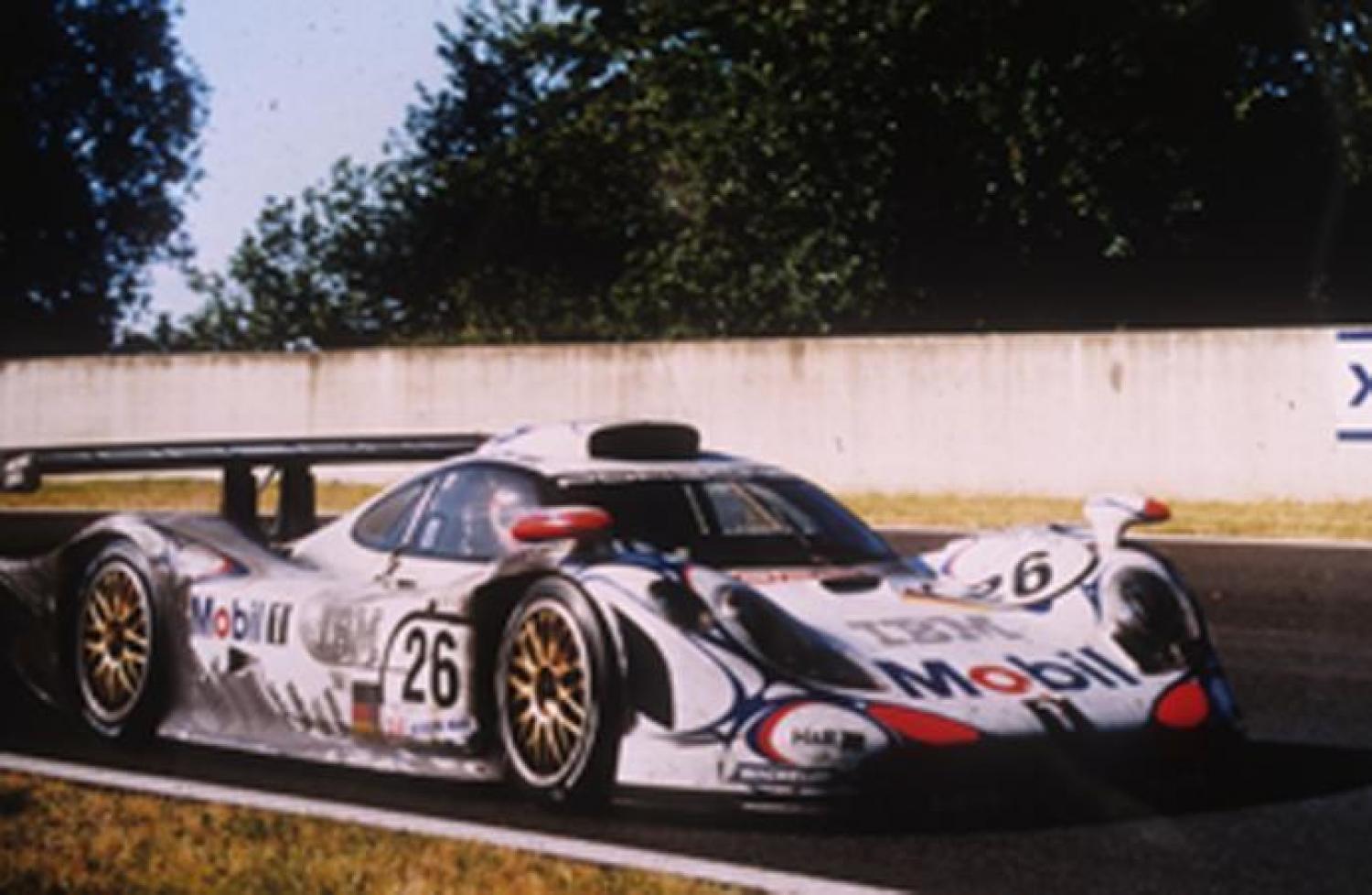
An all-new car was developed for 1998 and was the first Porsche competition car with a carbon fibre chassis. After a long wrangle with the Toyota GT-One, Laurent Aiello-Stéphane Ortelli-Allan McNish and Bob Wollek-Uwe Alzen-Jörg Müller celebrated Porsche's 50th anniversary with an emotional 1-2, two and a half months after the death of Ferry Porsche (1909-1998), son of the firm's founder Ferdinand (1875-1951).
The Stuttgart-based manufacturer would only return to Le Mans with a works team in 2013. They came back with a... 911, which claimed Porsche's 100th Le Mans win across all classes.
Read the previous episode in our series of 45 stories about Porsche at the 24 Hours of Le Mans.
Jean-Philippe Doret / ACO
Translated from French by Clair Pickworth
Photo: LE MANS (SARTHE, FRANCE), CIRCUIT DE LA SARTHE, 24 HOURS OF LE MANS, SATURDAY 6 & SUNDAY 7 JUNE 1998. With its emblematic 911, Porsche took victory at Le Mans to celebrate its 50th anniversary.
- 24 Heures du Mans
- Historique