Summary:
- The Ford Racing Hypercar was on track for 24 hours of the 30 planned.
- Despite a cooling issue entailing an engine change, the two cars covered over 7,300 kilometres between them.
- The Ford Hypercar now has a more powerful, lighter V8.
- The car is 95% defined and further testing is planned prior to homologation.
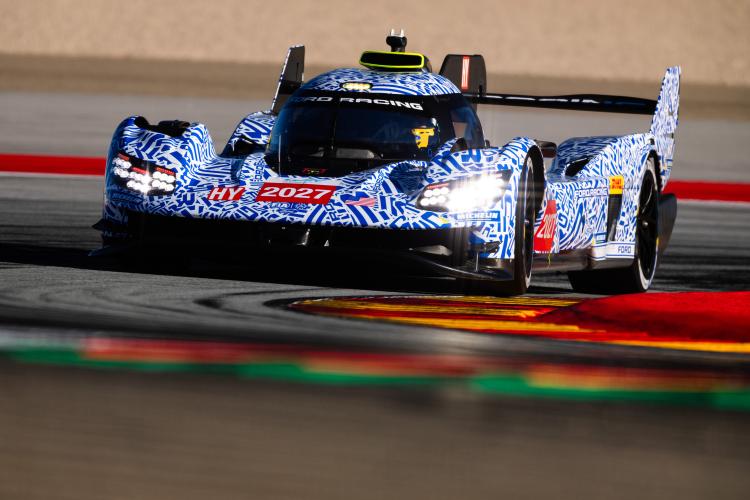
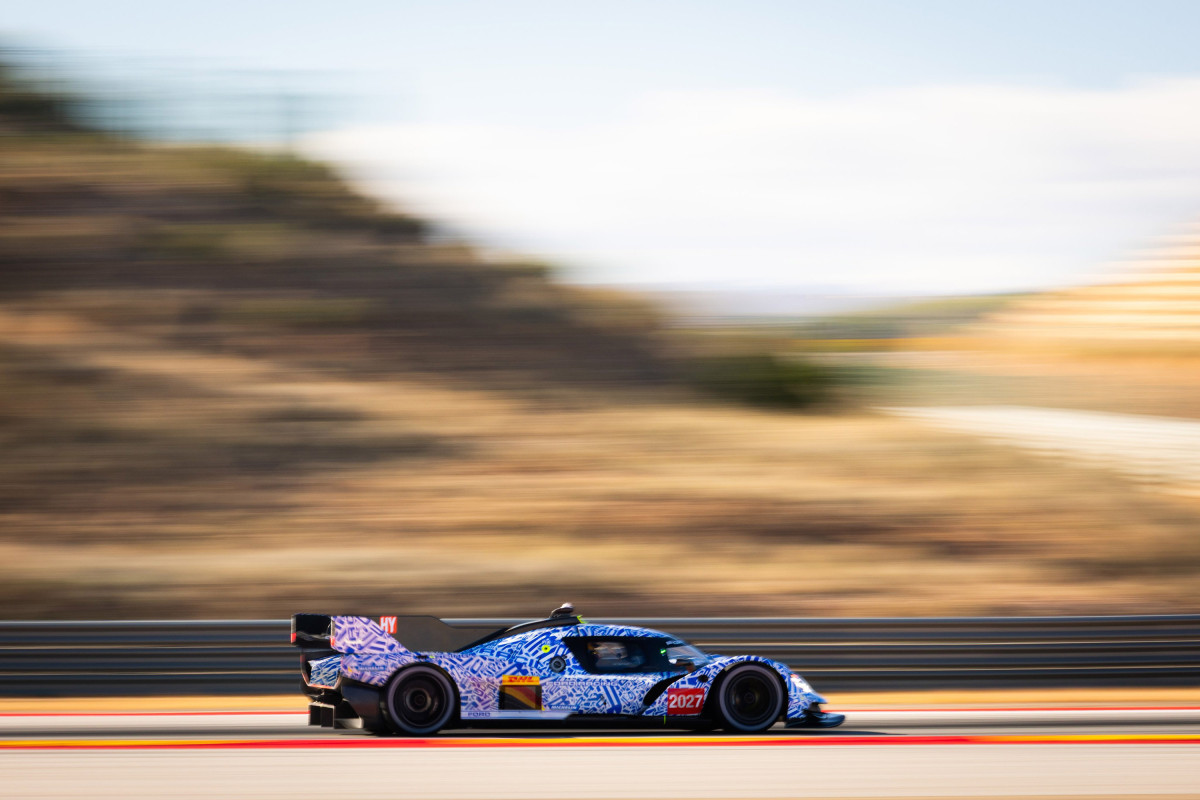
Ford Racing’s first 30-hour endurance test at MotorLand Aragón is the continuity of the Hypercar’s development ahead of the next 24 Hours of Le Mans (9-13 juin). The next few weeks will be spent improving reliability, working on the engine, testing at Sebring and homologation. Ford Racing Hypercar programme manager Dan Sayers reveals what the team learned from their first endurance test, and what remains to be done.
What is the outcome of the 30-hour endurance test?
The endurance test at the Spanish circuit MotorLand Aragón was a leap into the unknown. Until then, the Hypercar had not covered more than a stint and a half at a time. The aim of the test was to reproduce endurance race conditions and push the machinery to the limit.
Two cars were used: one for the endurance test, the other continuing performance and controls development.
The Oreca chassis has already been tried and tested in competition environments. However, the orchestration of the Ford engine, bodywork and many specific components remained a challenge. Wiring, harnesses, and routing systems have to work in harmony for many hours.
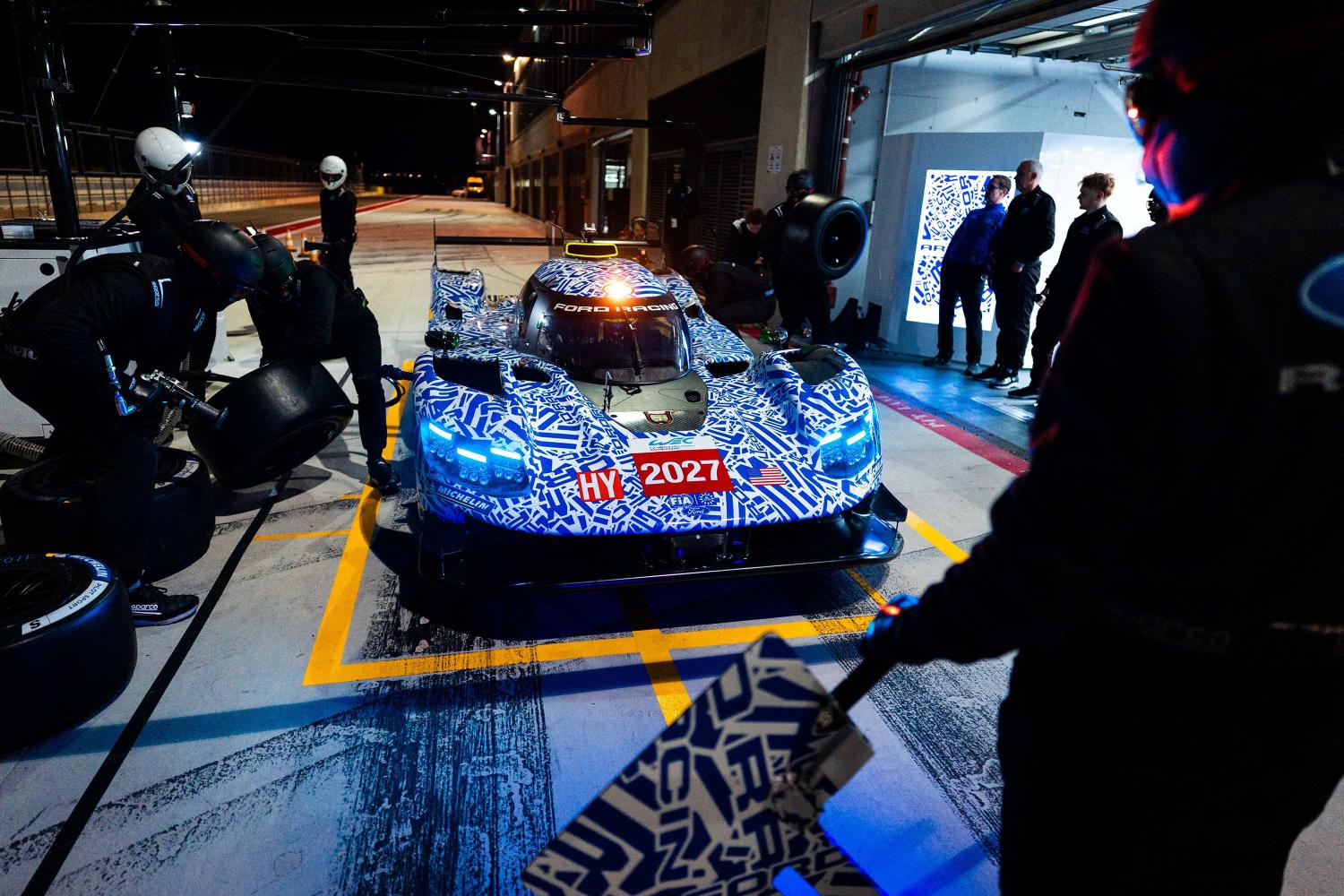
The plan was to be on track for 30 hours, with a few scheduled intermediate inspections. None of them revealed any issues. However, a cooling system issue led to several unplanned interruptions and resulted in an engine replacement at 2:30 a.m.
A setback? Sure. A failure? Not according to Dan Sayers. “Despite the engine change, we did actually run for over 24 hours of the 30 scheduled. Overall, it was what I would call a very successful first endurance test. There were no failures that we’re concerned about,” explained the programme manager.
Over 7,300 kilometres of learning time
The two cars covered over 7,300 kilometres between them; a considerable distance for cars still under development.
The cooling issue was extremely simple to resolve, which was a little frustrating. However, lessons were learned! “Could we reasonably expect to run for 30 hours without a hitch? Obviously not. Nobody really expected that,” admits Sayers.
His frankness translates the philosophy behind this programme. An issue identified at this stage is less likely to arise during a race. At the 24 Hours of Le Mans, consistency isn’t a given. It’s built up, lap after lap: intricate systems functioning like clockwork. Nobody notices when they function.
A more powerful, lighter V8 engine
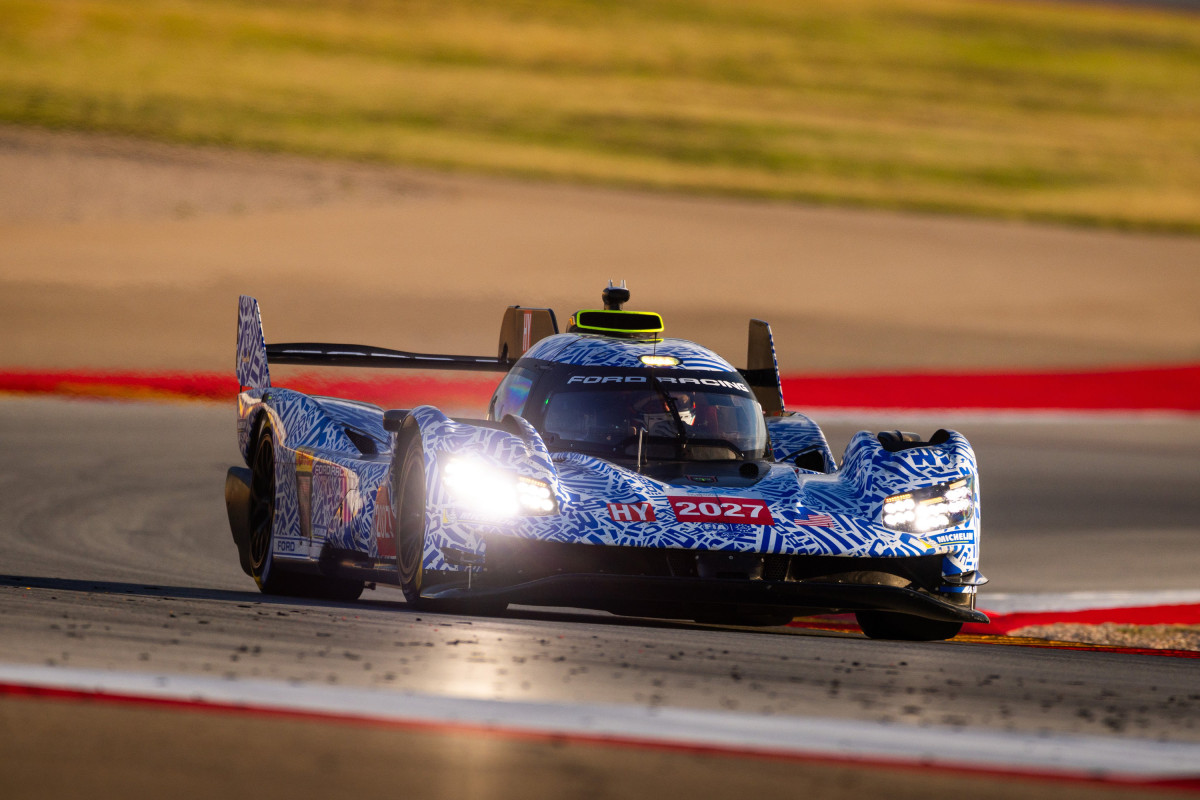
The other major takeaway was the powertrain. The Ford Hypercar is fitted with a new specification 5.4-litre V8 naturally aspirated engine, developed in-house.
The team’s engineers have squeezed out more power, with reduced mass, a combination that significantly improves the car’s overall performance.
The new version had completed 30 hours on the powertrain dyno before it was put in the car. However, it had never been tested on track. “It was a slight risk,” says Dan Sayers. “But that’s what a condensed test programme does. The design has been continuous over the last 18 months, 2 years.”
A fruitful collaboration with Red Bull
Ford Racing can rely on knowledge acquired in other motorsports disciplines such as Formula One.
The American manufacturer’s engineers worked with Red Bull on the hybrid system and were able to observe the interactions between the various parts of the electric powertrain. There is no direct transfer of this technology to Hypercar. However, much of the knowledge can be applied to the endurance racing programme. “Obviously, getting to the point where we are competitive with the other manufacturers who’ve been doing it for a long time is going to take us time.”
Sebring, the next hurdle for the Ford Hypercar
After MotorLand Aragón, Ford Racing heads to the particularly demanding Sebring circuit, in Florida, where the first session is scheduled in mid-December.
Sebring’s notoriously bumpy, punishing concrete is sure to reveal any handling issues.
The main goal for the next test will definitely not be speed. However, the choppy surface should reveal any mechanical or structural weaknesses before the next endurance test.
“The circuit might throw up new issues or highlight a few things,” says Sayers.
Choosing Sebring is significant. Its bumps and vibrations will put the mechanical components, structure and suspension through the mill.
The Aragón test was about staying power. The Sebring test will be about resistance.
Two circuits, two types of constraint, same goal: to get to Le Mans with a car that has already been pushed to the limit in all directions.
Homologation: the near-final version of the Ford Hypercar
Besides the testing programme, Ford Racing is also working towards homologation.
The procedure is designed to assess the car’s compliance with the technical regulations before it can engage in competition. It is an important stage, as the homologated characteristics form the base for the prototype’s evolution.
According to Dan Sayers, the Ford Hypercar is 95% finalised.
It has to be said that the manufacturer is working on two programmes at once. In the USA, a car is specifically intended for aerodynamic homologation is being developed in a wind tunnel and the team’s engineers are gradually making adjustments based on the results of the track tests. At the same time, when the laboratory research produces the desired performance, the cars used on track are adjusted so as to reflect the definitive version.
This dialogue between wind tunnel and circuit helps refine settings ahead of homologation, scheduled for next month.
The technical definition of the Ford Hypercar is nearing its final version. The car will be officially presented to the public on Thursday 26 November 2026.
FAQ: The Ford Racing 2027 24 Hours of Le Mans Hypercar programme
How much ground did Ford cover in the 30-hour test?
The two Ford Racing Hypercars covered a total of 7,300 kilometres during tests at MotorLand Aragón. The car used for the endurance test ran for over 24 hours out of 30, despite several interruptions to deal with mechanical issues.
What improvements have Ford made to the Hypercar engine?
Ford Racing has developed a new-specification 5.4-litre V8 naturally aspirated engine with increased power and reduced mass. It ran for 30 hours on the powertrain dyno before being used in the car.
Why is Ford Racing going to do a test at Sebring?
Ford Racing is looking to test the Hypercar’s reliability on a demanding circuit. The first session is scheduled in mid-December and there will be another 30-hour endurance test in January.
When will the Ford Hypercar be homologated?
Homologation is scheduled in December. According to Dan Sayers, the car is 95% finalised.
Which manufacturers will Ford Racing be facing at the 2027 24 Hours of Le Mans?
At the 95th running of the 24 Hours of Le Mans (9–13 June), Ford will compete against Aston Martin, BMW, Cadillac, Ferrari, Genesis, McLaren and Toyota. The race will be the fifth round of the 2027 World Endurance Championship.
- 24 Heures du Mans
- FORD