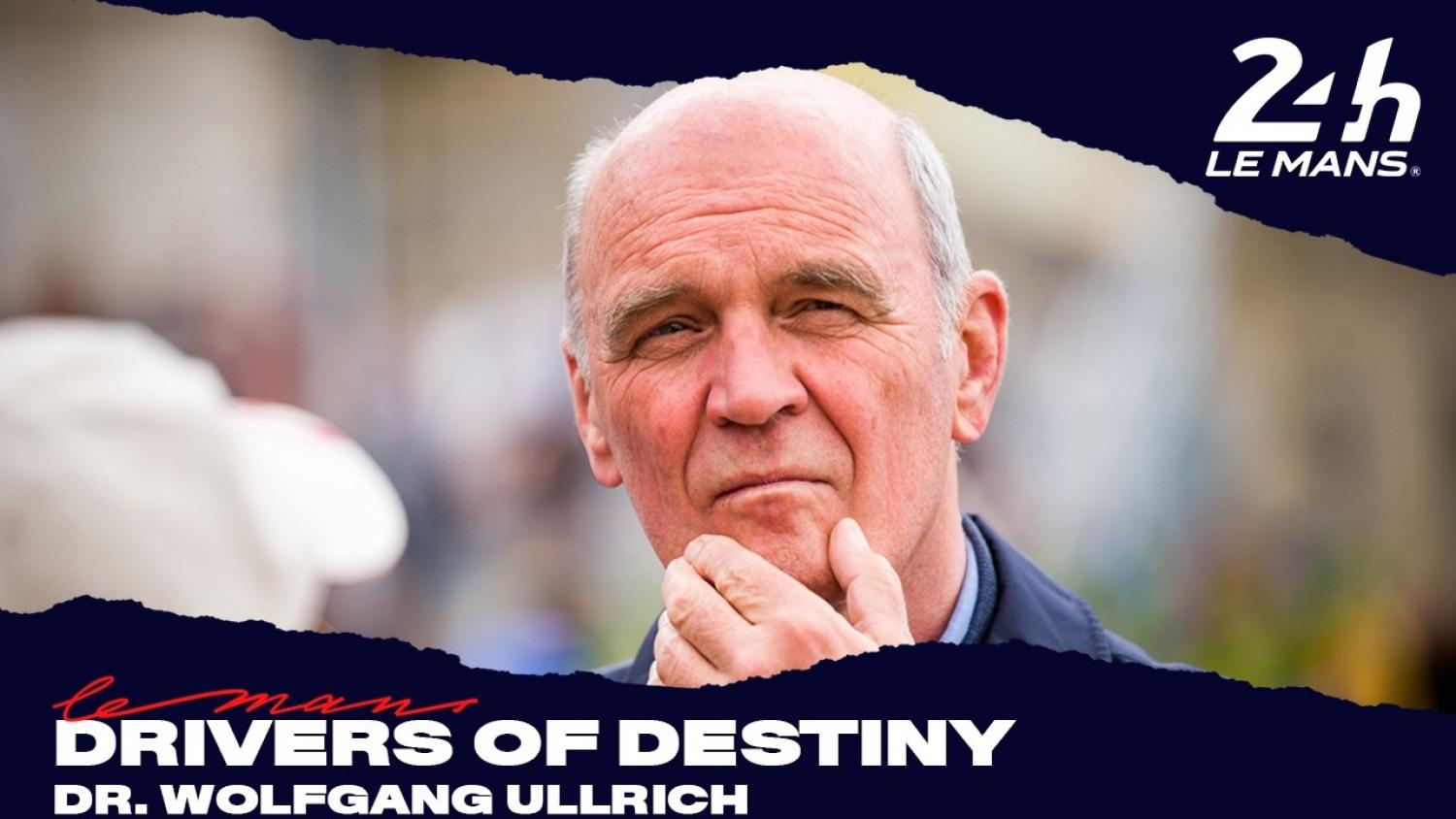
Wolfgang Ullrich considers the 24 Hours to be much more than an endurance race. It's a competition in which speed is not enough, every individual team member matters and the unpredictable can derail what appears to be a certainty. In this new episode of Drivers of Destiny, the legend who led Audi’s motorsport programme during its glory days at Le Mans shares his thoughts on the thrill of clinching a historic victory in 2000 to the art of anticipating the most unexpected scenarios, and he reveals what makes the 24 Hours a race like no other and an extraordinary school of life.
the 24 Hours of le Mans is a challenge like no other
When Audi decided to take part in the 24 Hours of Le Mans in 1999, the German carmaker discovered a whole new world. It had to grasp the complex DNA of the event and find the keys to competing against rivals who were already seasoned veterans of the race.
Ullrich vividly remembers the early days. Taking the start in the 24 Hours with a team that had never before competed in the race presented a monumental challenge, and marked the starting point of an adventure that would leave a profound impact on everyone involved.
Wolfgang Ullrich: Le Mans is for me a very special place because when we decided to do the 24 Hours of Le Mans, we [were] a completely new team, never did it before and there was a lot to learn there. And through the years, I found out that the special thing in Le Mans is the one hand a unique race where really the one that is doing the better job than all the others for 24 hours will be the one that is going to win, and that around the circuit there is a village that really lifts this race for the whole year long and it’s so special that I think this will stay in my heart forever.
Speed, performance and the drivers' ability to share the same car are all crucial factors. But you also have to know how to build a team, coordinate skills and maintain an impeccably high standard for 24 gruelling hours.
Performance level and the result it earns are all about teamwork. Every decision, every pit stop and every stint can influence the final outcome. For Ullrich, the combination of all these factors are what sets the Le Mans classic apart. Ullrich: The 24 Hours of Le Mans is for me the race of all the races because it’s the unique combination of speed, team spirit and driver’s ability first to share a car, to find a solution to be quick. Each one of each team, it [is] something special and you find it only there. Because if you could be competitive in Le Mans, you also could be competitive in the other races. The other way around, it is much more difficult.
2000: a win seared in the collective memory
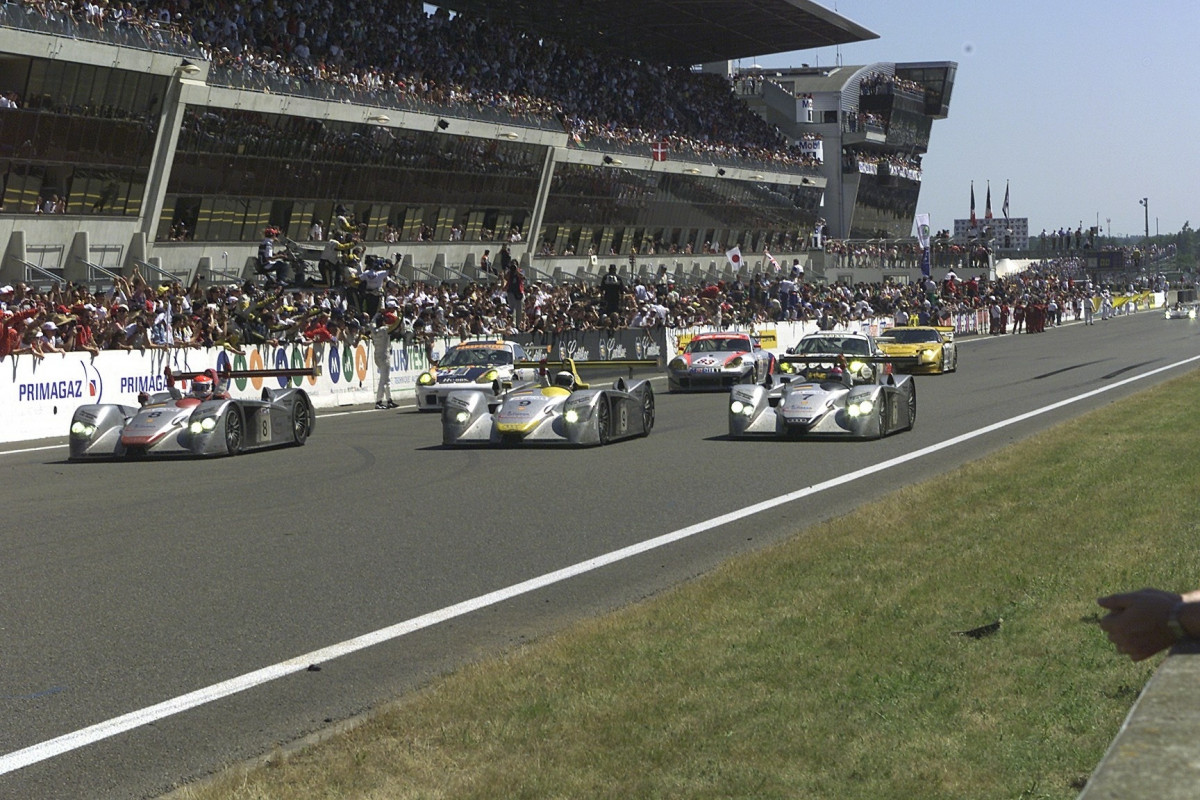
The 2000 24 Hours holds a special place among all of Ullrich’s memories. Having first competed at Le Mans the previous year with four cars fielded, Audi returned with its sights set on victory. The team went on to achieve a historic result: a clean sweep, securing the top three positions in the overall classification. Ullrich: Yeah, for me the year 2000 with [the] triple victory for sure will stay the one that is very, very special. Because coming and trying to be competitive is one thing, but being there for the second year and having the power to make a one, two, three it was so special that we’ve been really proud of the team, of the drivers, of everybody that was supporting us, I think this will always stay in all our minds that were in the team in this period of time.
Experience has taught Ullrich one essential rule: never consider a race over until the chequered flag is waving. The lesson may seem simple, yet it encapsulates much of what makes Le Mans so challenging. Over the course of 24 hours, teams must not only maximise their car’s potential, but also contend with events beyond their control. Ullrich: I’ve been learning in Le Mans that there is one thing you never should think that the race is over before the flag is down. And every race was bringing unpredictable things, and from year to year we learned that we have seen so many unpredictable things already but there will be others coming and we always tried to think about what could be unpredictable in the race and try to find solutions that if things are coming that are not normally the standard of a 24-hour race. And I learned a lot, not only for racing, I learned a lot for [my] life by understanding how to handle the 24 Hours of Le Mans.
a lesson that goes beyond motorsport
Looking back, Ullrich draws lessons from the 24 Hours that extend well beyond the realm of competition. First, there is anticipation: being able to envision various scenarios allows for a better response when circumstances change. Then, there is the collective aspect: success depends on each person’s ability to make their own contribution while placing trust in others. Finally, there is humility: while experience provides a better understanding of a situation, it can never entirely eliminate all uncertainties.
In this episode of Drivers of Destiny, Ullrich shares the perspective of a man who has learned to navigate uncertainty at the highest level of motorsport. His account serves as a reminder of an essential truth: you can prepare for a race down to the smallest detail, analyse past experiences and envision every possible scenario — but until you cross the finish line, the ending of the story remains to be written.
- 24 Heures du Mans
- AUDI SPORT TEAM JOEST