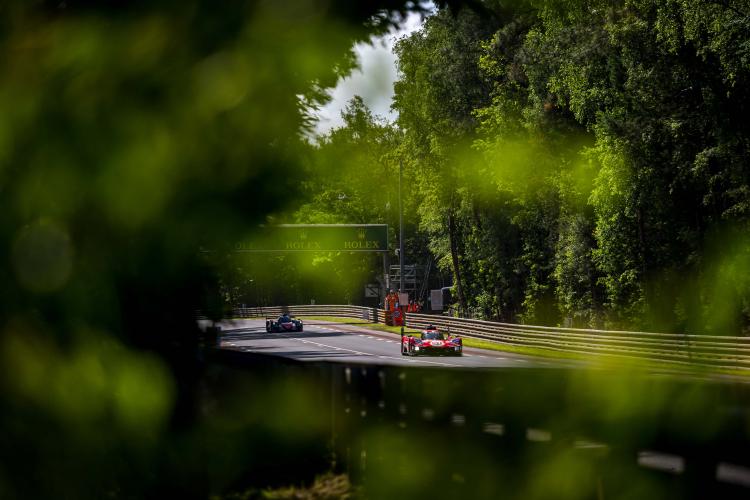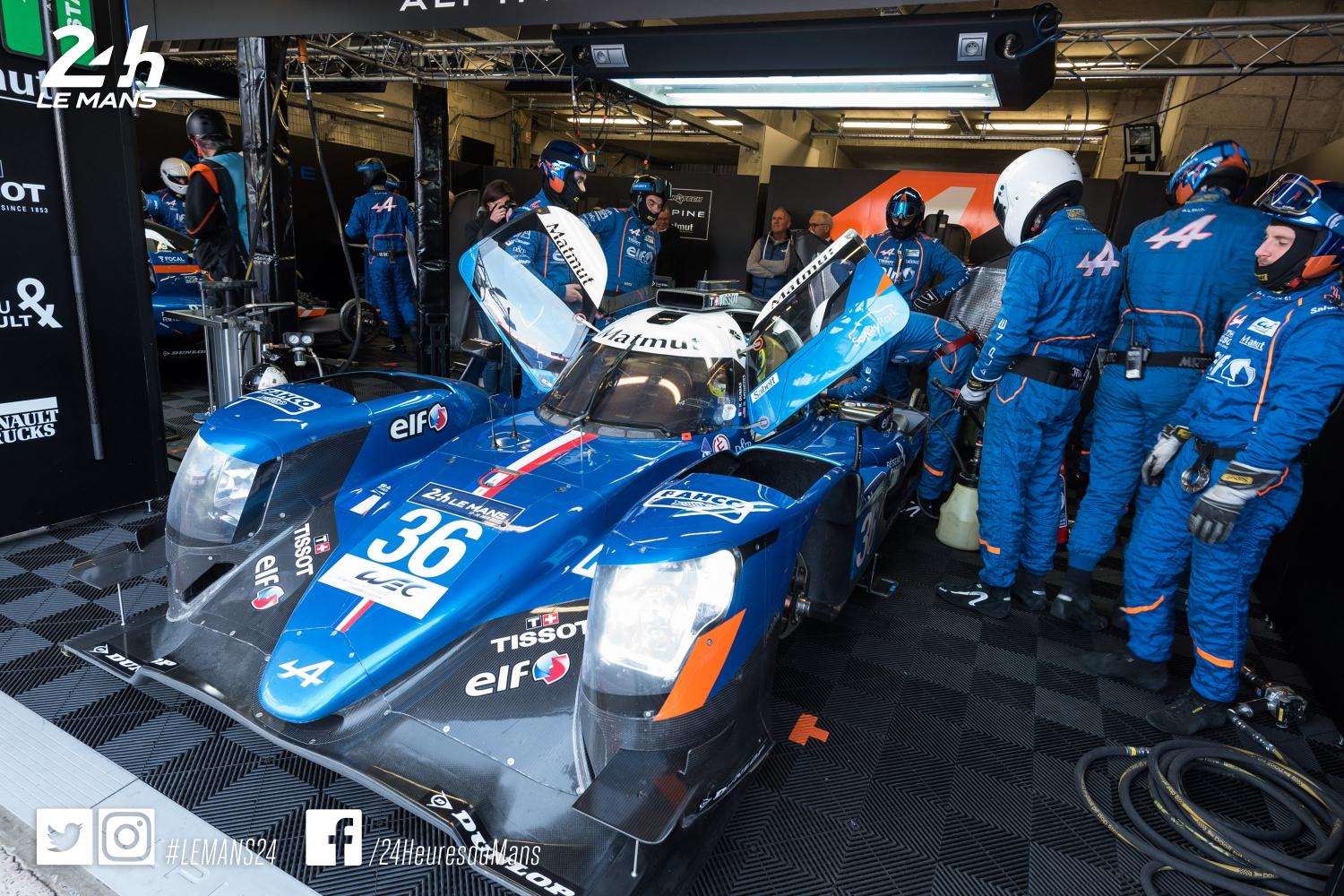
Test Day is the real kickoff of the 24 Hours of Le Mans. The 60 teams who will take the start at the 24 Hours of Le Mans on Saturday 16 June at 3:00 p.m. (2:00 p.m. in the U.K.) will take part in free practice sessions to prepare for the race, but that's not the only reason. Michaël Bimont, head mechanic for Signatech Alpine Matmut's #36 Alpine A470-Gibson: "Test Day allows drivers to get their bearings on the track. It's also an opportunity to work on the car and for team members to get into the rhythm of the 24 Hours of Le Mans. In general, during that day we work on the car's settings and driver changes. It truly is a rehearsal."
Sunday at 9:00 a.m. local time when the cars hit the track, most will only do one lap and quickly return to their pit. Why is that? Michaël Bimont: "First we do a reconnaissance lap to confirm there are no leaks in the car, that the driver's position is good and that the engine and gearbox are functioning well before tackling the settings."
“"Track time at Le Mans is precious."”
— Michaël Bimont
In the Signatech Alpine Matmut team, Sunday's program has already been established and is understood by team members. Michaël Bimont: "We will print an itinerary listing all interventions, various driver changes, tire selections and different body heights we'll test out. We have all that worked out well ahead of time."
24 Hours of Le Mans Test Day makes available eight hours of track time to the teams. It's invaluable says Michaël Bimont: "Track time at Le Mans is precious, we'll take it. It helps us make progress and head in the right direction with the car."
Though Signatech Alpine Matmut can benefit from data already collected last year at the 24 Hours of Le Mans to perfect the settings of the Alpine A470-Gibson, Swiss team Rebellion Racing is starting with a blank slate with its new Rebellion R13-Gibson, a non-hybrid LMP1 prototype. Neel Jani says: "There are a lot of electronic systems to test. Le Mans is a very specific track compared to what we experience the rest of the year. We're going to start working on the settings and continue learning this new car. We'll also work on the tires, the anti-roll bars, the suspension, the brakes, the springs to make sure everything is working well and that grip is good."
Sunday will certainly be a busy day for the teams, but at least the track will be dry and the weather pleasant, with temps reaching 28°C. Here's to a very successful Test Day!
- 24 Heures du Mans
- Neel Jani
- REBELLION RACING
- SIGNATECH ALPINE