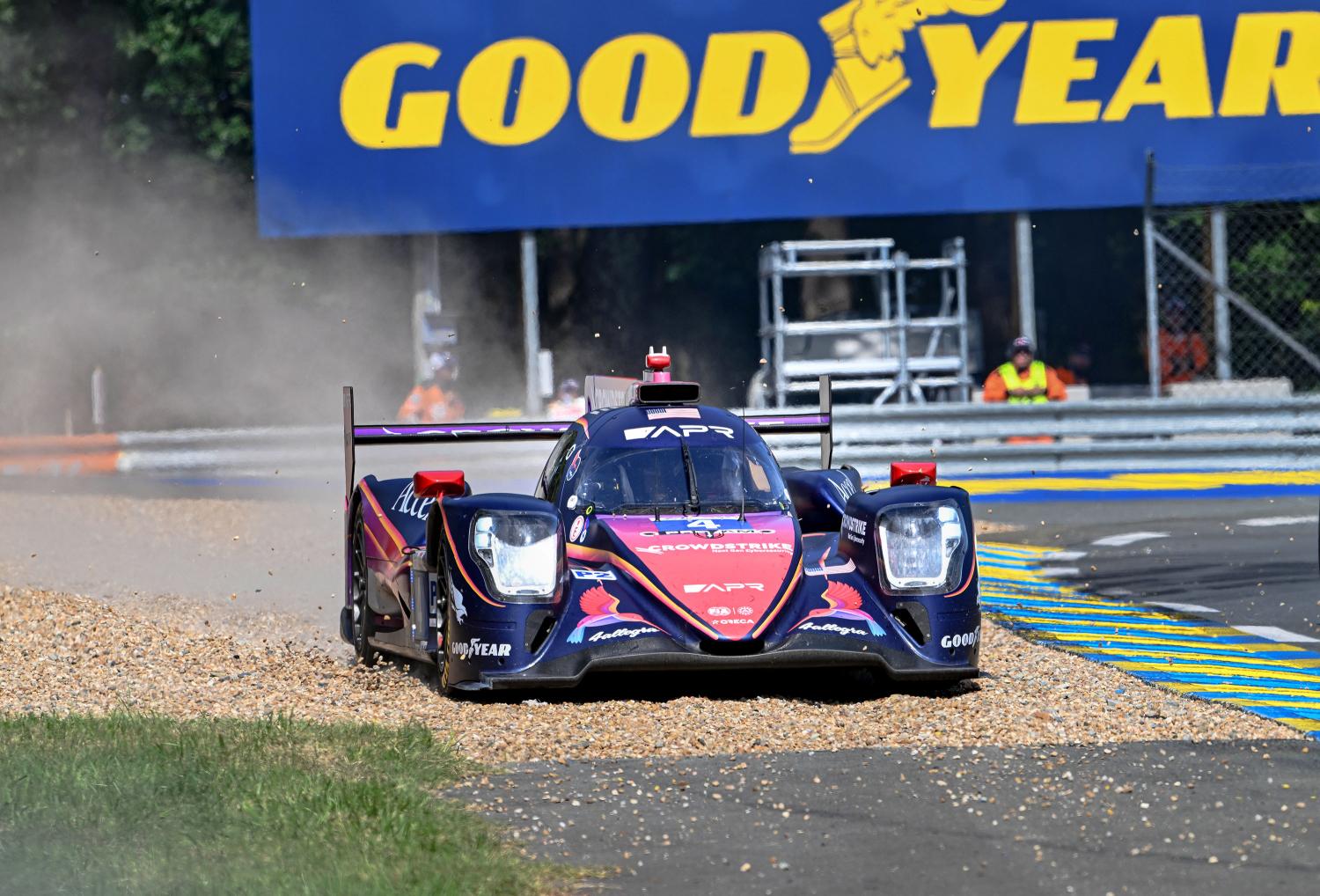
The rules and regulations governing endurance racing have been established over a hundred years, and adapted to innovation and real-world experience. Some 24 Hours of Le Mans rules may seem strange at first glance. Yet they all reflect the DNA of the race: safety, endurance racing, technology and the unique capacity to push boundaries while remaining in control.
1. A driver who is further than 10 metres from their car may be considered to have withdrawn from the race
Imagine a Hypercar stopped on track in the middle of the night. The driver gets out and heads for the nearest marshal post. At the 24 Hours of Le Mans, they could be disqualified.
The rules state that a driver who is further than 10 metres from their car may be considered to have withdrawn from the race. As long as there is a chance that the car can rejoin the track, the driver should remain near the car.
2. Nobody should approach a stationary car
When a car has stopped on track, it is immediately surrounded by an invisible exclusion zone.
Only track marshals are authorised to approach less than 10 metres from the car or the driver. This is a safety precaution, to protect competitors and officials, especially where hybrid vehicles fitted with high voltage electrics are concerned.
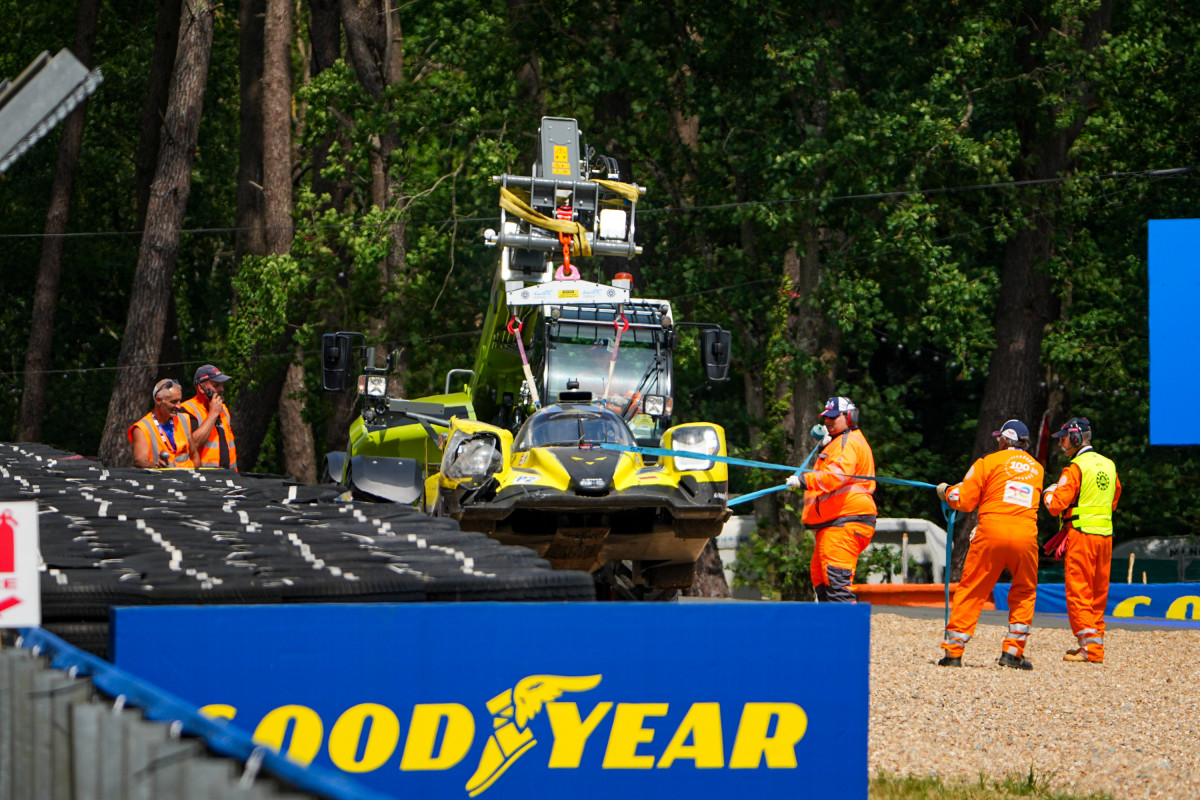
3. It is strictly forbidden to push a car
The image of the driver heroically pushing the car back to the pits belongs to the past.
Competitors no longer have the right to push their cars, including in the pit lane. This rule guarantees fairness and safety for everyone on and around the track.
4. The last lap must be completed in less than six minutes
The 24 Hours of Le Mans is only over when you cross the finish line.
To be correctly classified at Le Mans, the final lap must be completed in less than six minutes. Otherwise penalties may be applied.
This little-known rule prevents a highly damaged car from taking a disproportionate amount of time to cross the line just to be in the classification.
5. A driver must be able to rejoin the track without assistance
Breaking down doesn’t necessarily spell retirement. However, the driver must be able to restart the car.
When a car stops during the race, the driver must be able to restart the engine themself, using the onboard system. Drivers are prepared for this sort of emergency. If they need help, the mechanics can give instructions over the radio, if it is in working order, or via a specially-designated phone in the car. Technicians are also allowed to give advice in person at the scene, but are not permitted to touch the car themselves.
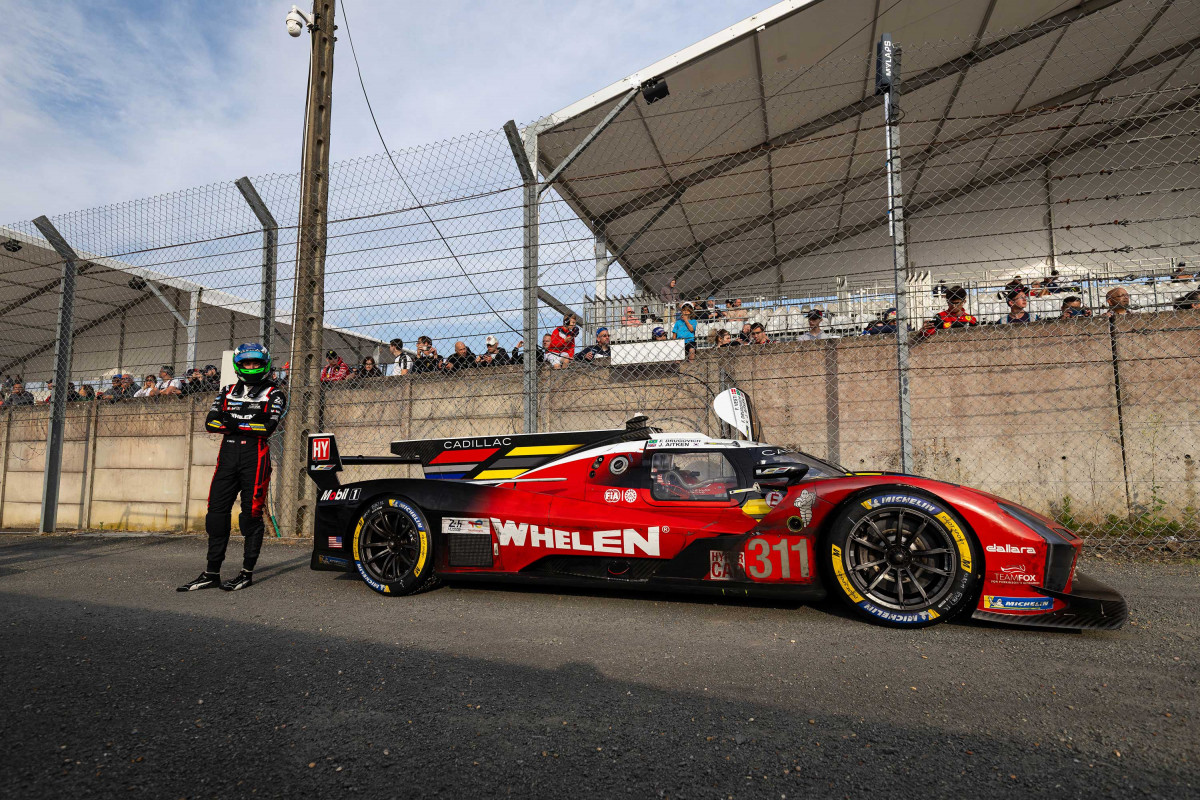
6. An innovative car can take part without competing
The Garage 56 entry introduced in 2012 underlines the race’s status as an automotive test bed.
Teams defending innovative projects may be invited to take part, without being part of the competition. Their goal is not to win, rather to explore new technology and imagine tomorrow’s mobility.
This tradition makes the 24 Hours of Le Mans one of the rare sporting events to have a head start on the future while celebrating the past.
7. The car must be visible in the garage
During Race Week, teams are not allowed to totally hide their cars from view.
The rules state that the sports cars must remain visible in the garage, and not masked by curtains, tyre walls or screens of any sort.
This rule contributes to the unique spectator experience offered at Le Mans. Here, fans can get close to the machines and see behind the scenes like nowhere else.
The rulebook wasn’t written in an office
At first glance, some of these rules may seem bizarre. However, they are all the result of years of experience, technical innovation, unplanned incidents and lessons learned on the ground.
A sum of contributions that together make the 24 Hours of Le Mans unique. Every car, every driver and every tactic are part of an ongoing legacy that began over a century ago. It’s precisely that mixture of tradition, technology and human endeavour that continues to make Le Mans the ultimate automotive experience.
- 24 Heures du Mans